
 11
11
John Carmack, the legendary programmer and former CTO of Oculus, has never been one to mince words. Known for his “unfiltered” keynotes, Carmack recently took aim at Meta’s aggressive monetization strategies. His primary target? The controversial 47.5% cut Meta takes from creators in its flagship social VR platform, Horizon Worlds.
While the tech industry has long accepted the “30% Apple Tax” as a standard, Meta’s fee structure for Horizon Worlds pushes the boundaries even further. Here is how the math breaks down:
30% Platform Fee: This goes to the Meta Quest Store (the hardware/OS level).
17.5% Application Fee: An additional cut taken specifically by the Horizon Worlds app.
Total: A staggering 47.5% of a creator’s revenue disappears before it ever reaches their pocket.
“If you’re trying to build a new ecosystem, you shouldn’t be charging more than the established giants who already have all the users,” Carmack suggested during his critique.
To put Meta’s fees into perspective, let’s look at how they compare to other major digital storefronts:
| Platform | Standard Developer Cut |
| Meta (Horizon Worlds) | 47.5% |
| Apple App Store | 30% (15% for small businesses) |
| Steam (Valve) | 30% (decreases with high sales) |
| Epic Games Store | 12% |
| Roblox | Variable (often ends up ~70% after all fees) |
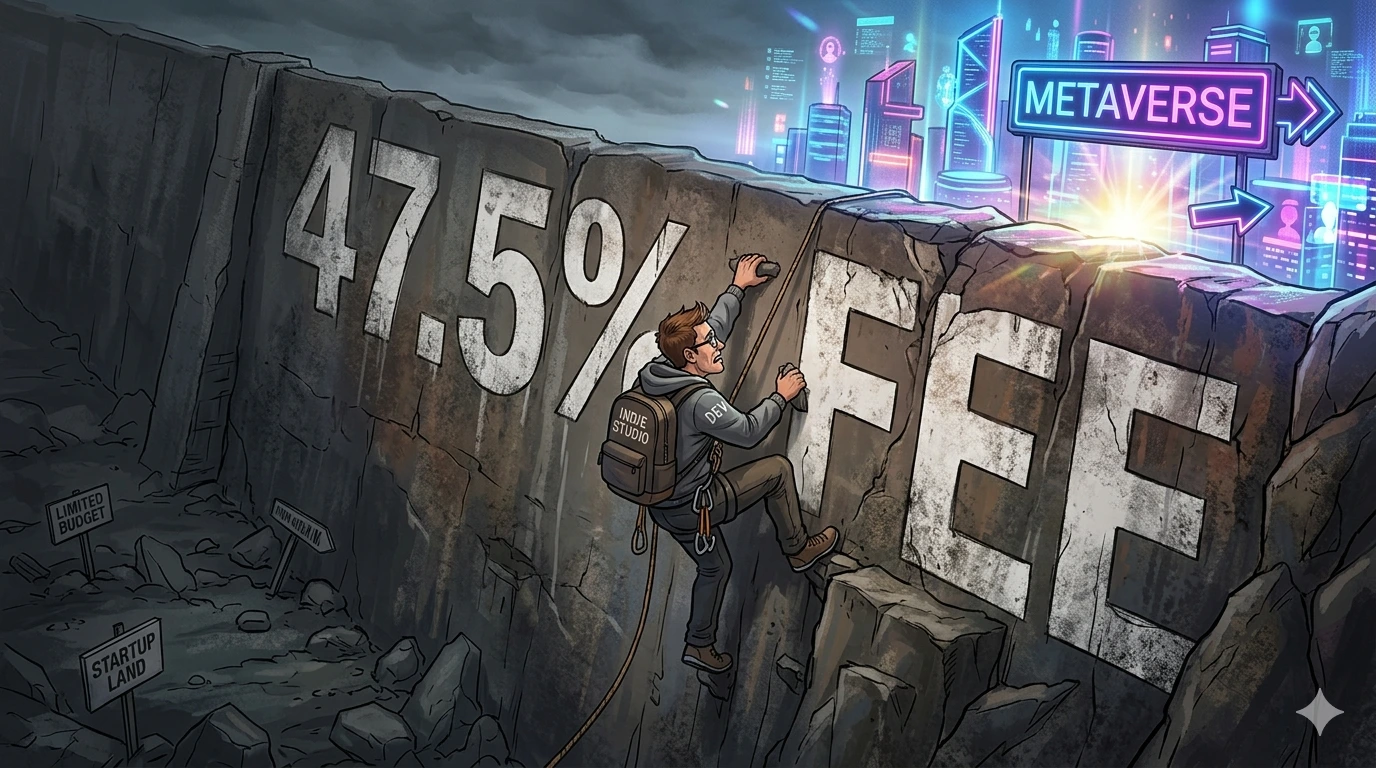
Carmack’s frustration stems from a simple philosophy: Growth must come before profit. In his view, VR is still in its “experimental” phase. By taking nearly half of a developer’s earnings, Meta is making it financially risky for small studios to innovate.
Stifled Innovation: Smaller developers might choose to build for more “open” platforms like the web or PC VR rather than Meta’s “walled garden.”
The “Roblox” Trap: While Meta points to Roblox as a precedent for high fees, Carmack argues that VR isn’t yet popular enough to justify such a heavy toll on its creators.
Developer Exodus: If the “math” doesn’t work for creators, the Metaverse remains an empty, polished digital world without the content needed to keep users coming back.

John Carmack has always championed efficiency not just in code, but in business. He believes that for the Metaverse to succeed, Meta needs to act less like a landlord and more like a partner. As Meta continues to pour billions into Reality Labs, the question remains: Will they listen to the man who helped build their foundation, or will they continue to prioritize immediate platform revenue at the expense of long-term ecosystem health?