
 11
11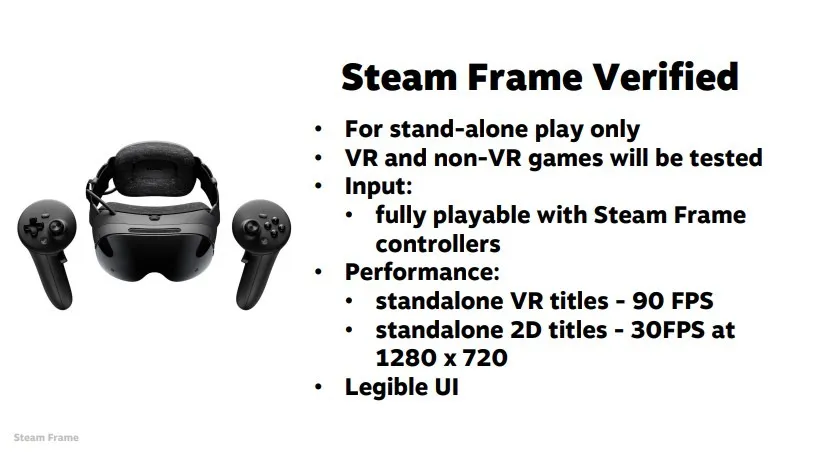
Valve recently introduced the Steam Frame certification to stabilize the fragmented VR landscape. This initiative mirrors the successful “Steam Deck Verified” program. Consequently, it guarantees a high-quality and comfortable experience across various hardware setups.
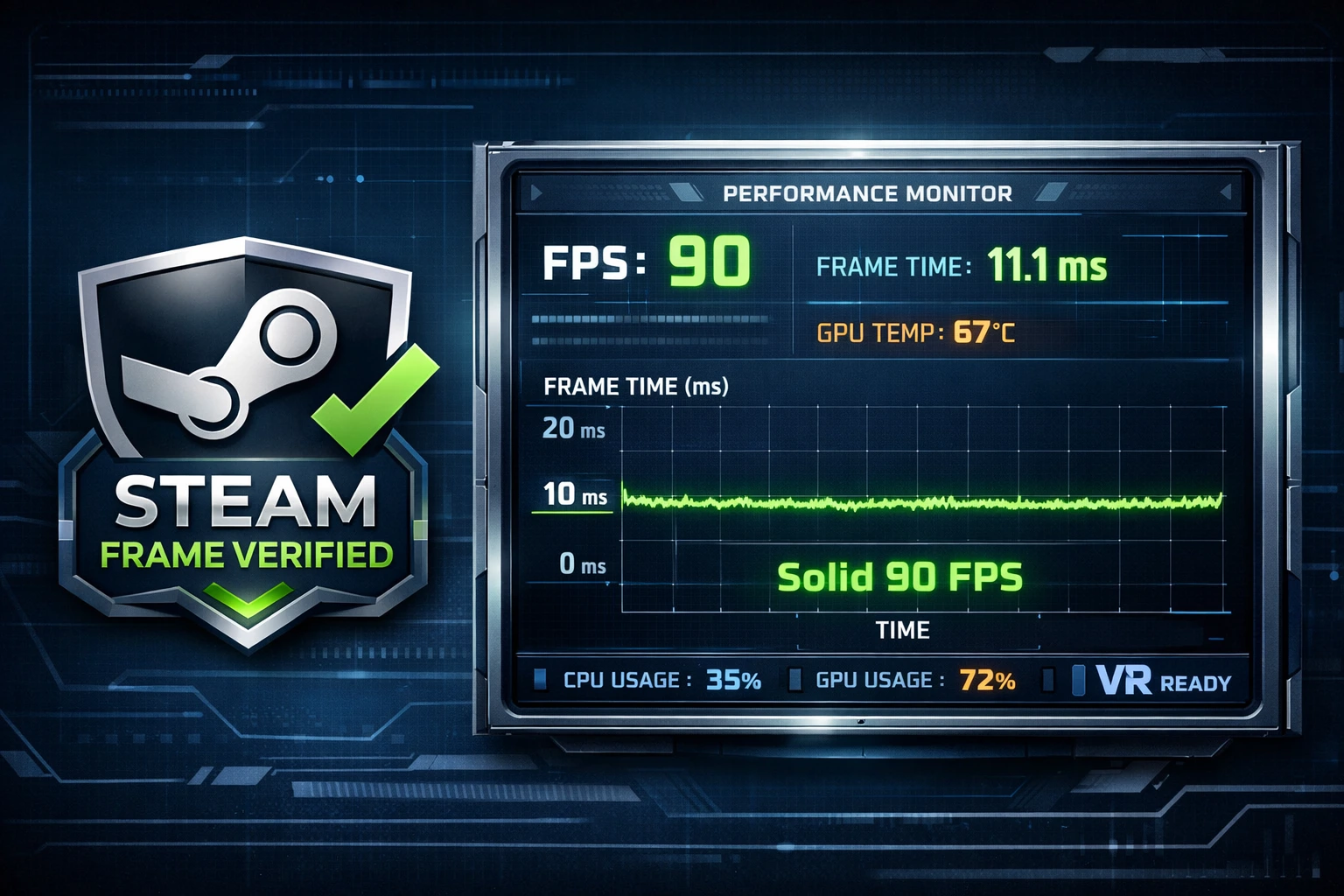
Performance serves as the cornerstone of the Steam Frame certification. Specifically, Valve now mandates a consistent 90 FPS for any “Verified” badge. Although some headsets support 72Hz, Valve believes 90 FPS is the “sweet spot.” This high frame rate effectively reduces motion sickness and ensures long-term immersion for players.
Developers must optimize their titles against specific criteria to earn the coveted badge. Therefore, they must pay close attention to the following technical specs:
Resolution & Scaling: Games must support a high minimum resolution per eye. Furthermore, developers should use FSR (FidelityFX Super Resolution) to maintain image clarity.
Input Latency: Valve enforces strict “motion to photon” latency limits. Consequently, any perceptible delay will disqualify a game from the Steam Frame certification.
Automatic Graphic Pre-sets: The game must detect hardware automatically upon its first launch. Then, it must apply a “Recommended” preset to guarantee the 90 FPS target.
UI Legibility: Developers must render all in-game text and HUDs clearly. This step prevents “screen door” interference and improves overall readability.
The Steam Frame certification supports more than just PC VR. Many experts believe it sets the foundation for Valve’s rumored standalone hardware. By hitting these targets now, developers prepare a massive content library for future mobile VR chips. As a result, these games will not require extensive ports later.

For years, VR suffered from inconsistent performance. A game might run perfectly on an RTX 4090 but fail on mid-range hardware. However, the Steam Frame certification changes this narrative. It puts the burden of optimization directly on the developer. Consequently, consumers always know exactly what they are buying.
As Valve refines these specs, the Steam Frame badge will become the industry’s most important “seal of approval.” Eventually, this move may force competitors like Meta to adopt even stricter quality controls.
For more insights on the industry, check out Road to VR’s technical reports. Additionally, you can read our previous analysis on John Carmack’s critique of Meta.